
How to prepare an on-camera interview that feels genuine
In a corporate video, the interviews carry the message. No amount of beautiful footage can replace someone explaining, in their own words, what they do and why it matters. But put most people in front of a camera and they freeze up. Here’s how I prepare an interview so the person on camera feels comfortable, and the end result feels genuine.
Start with what the video is for, not a list of questions
Before you write a single question, you need to know what the video is for and who’s going to watch it. The questions won’t be the same for:
- a corporate film, where the aim is to explain what the company does;
- an employer branding video, where the aim is to make people want to join the team;
- a client testimonial, where the aim is to reassure future clients;
- an event video, where the aim is to carry a guest’s message beyond the room.
Take the Equans corporate film, produced with the agency Oblique. The goal was to show the company from the inside, so the questions focused on each employee’s role, their day-to-day work and what they enjoy about it. Not on the company’s figures.
BCLMS, on the other hand, is a building company that wanted to showcase one of its projects. Here, the client interview was essential: he’s the one describing, in his own words, how the project went. That’s far more convincing to prospective clients than a company talking about itself.
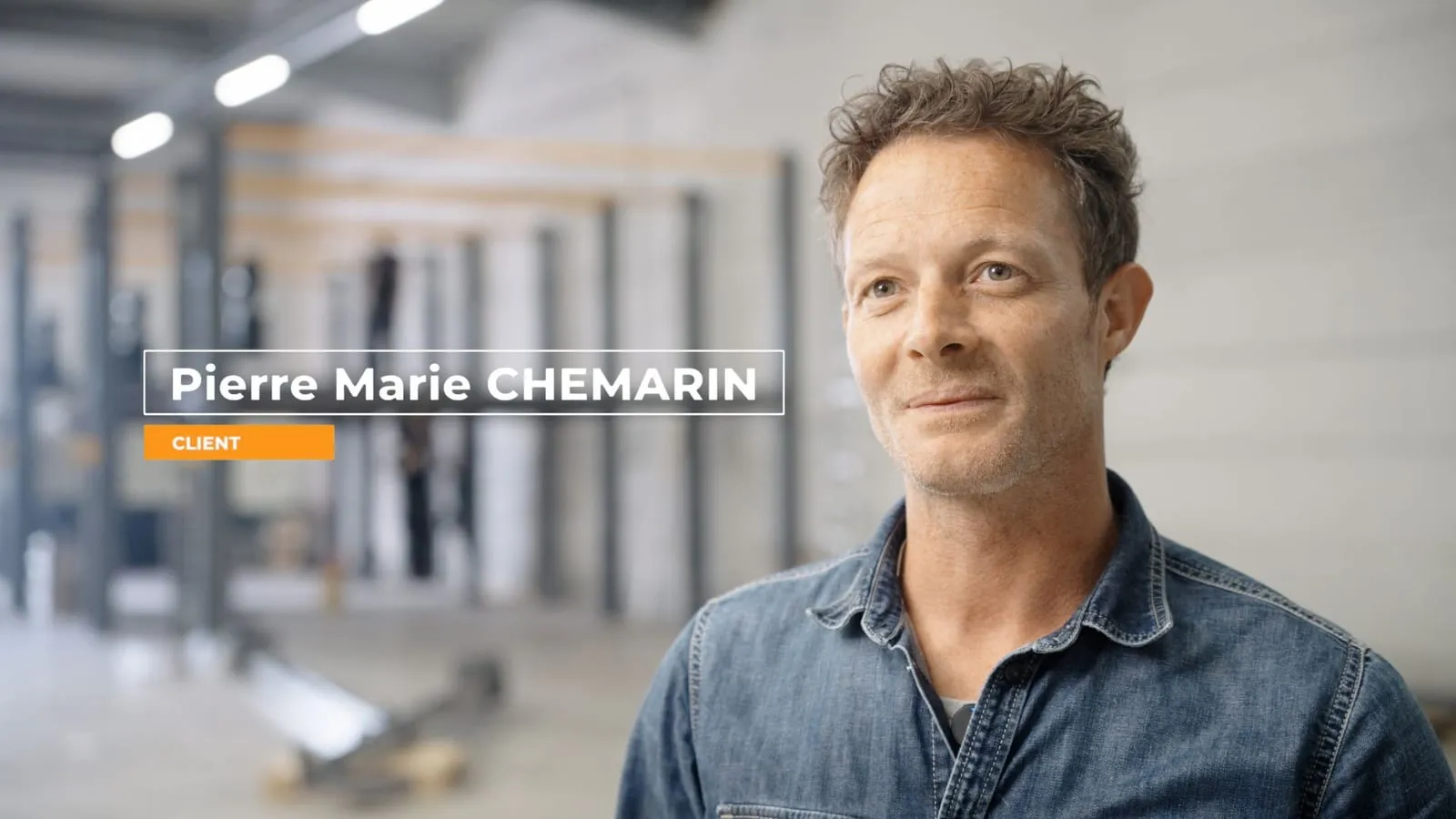 A client testimonial in the BCLMS construction film.
Ask open questions
A good question invites a story, not a yes or a no.
- Instead of “Do you like your job?”, try “Talk me through a typical day.”
- Instead of “Was the project a success?”, try “What’s changed since?”
- Instead of “Are you happy with us?”, try “Why did you choose us?”
I put together a set of questions based on what the video needs to achieve, and you sign them off before the shoot. They’re a guide rather than a script: during the interview, I follow up on whatever the person brings up.
Should you send the questions in advance?
Yes, but not the answers. Sharing the questions gives people time to think about what they want to say. An answer learned by heart, though, gives itself away immediately: the delivery sounds rehearsed and the eyes drift as they try to remember the lines. The sweet spot is knowing the subject without working from a script.
One tip: I often ask interviewees to include the question in their answer. “How long have you worked here?” becomes “I’ve been at… for…”. That way, each answer stands on its own in the edit, without anyone hearing the question.
Pick the right location
The location says a lot before the person has even opened their mouth.
- Somewhere quiet. A room of around ten square metres is plenty. Steer clear of open-plan offices, coffee machines and windows onto the street.
- A background that tells a story. A workshop, a building site, a shop, a stand: the setting helps viewers understand the work.
- Depth. A few metres of space behind the person beats a wall right behind their head.
For the Action Logement video in Chartres, shot over two days, the people involved talk about the project intercut with footage of the site. You understand the project by seeing the place, not just by hearing about it.
For BCLMS, we filmed the interviews in one of the company’s warehouses. It was a big, quiet space with lots of depth behind the interviewee, so the background falls softly out of focus and tells the story of the trade without pulling attention.
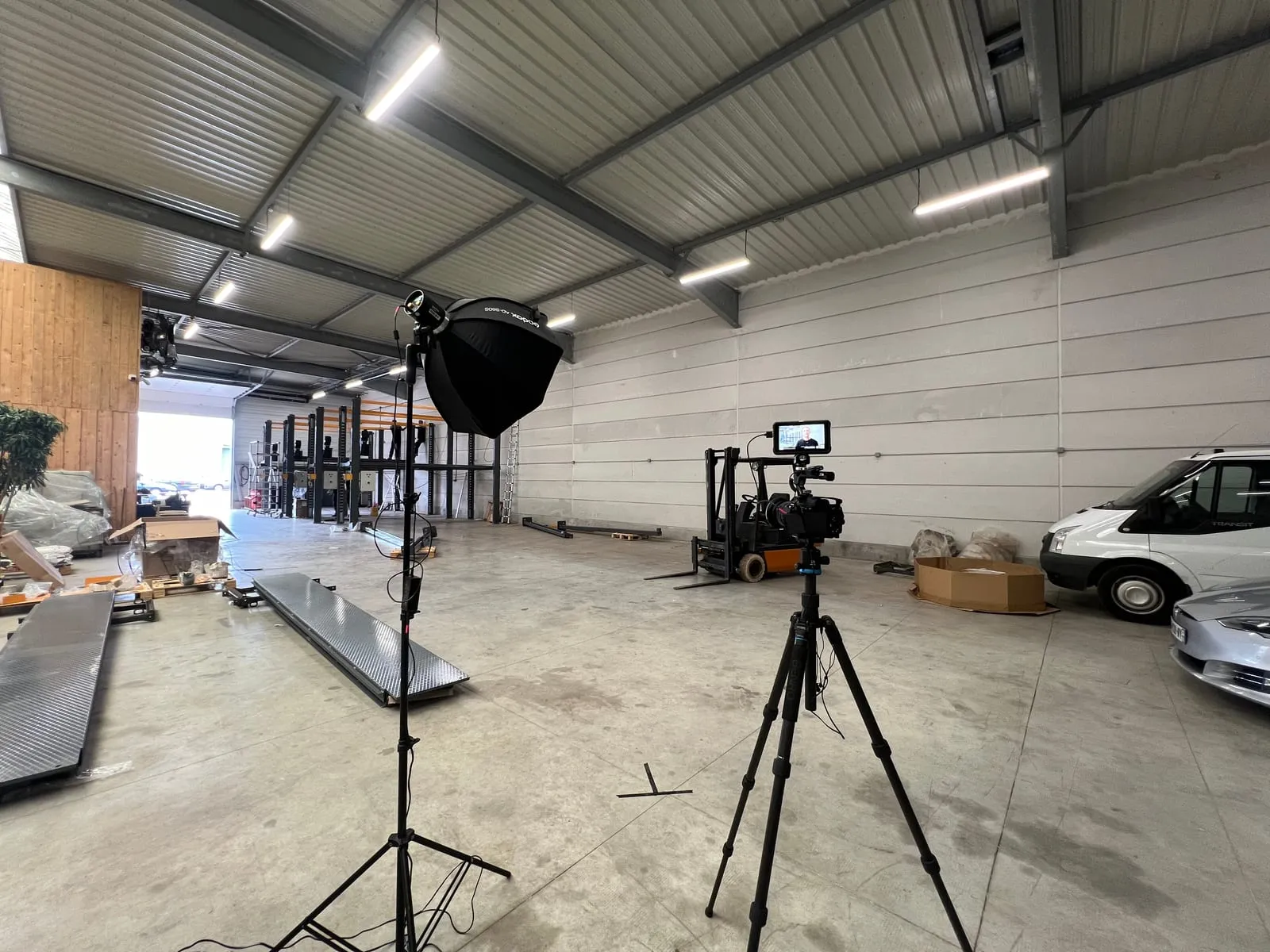 The interview setup for BCLMS, using the depth of the warehouse as a backdrop.
What to wear
A few simple rules:
- clothes they feel comfortable in and that look like them on a normal day;
- avoid small, tight patterns (fine stripes, small checks), which shimmer on camera;
- avoid bright white and solid black where possible;
- bring a change of clothes if in doubt.
On the day: putting people at ease
This is the most important part of the job, and the one nobody sees. Most interviewees aren’t used to being on camera.
- Take a few minutes first. I chat with the person while I’m setting up, without rolling. They get used to me and to the camera.
- Explain how it works. They don’t look down the lens: they talk to me, just beside the camera. They can stop, start again, get it wrong. None of it is going out live.
- Open with an easy question. A quick introduction, their background: we ease into the conversation with no pressure.
- Keep the room clear. The more people watching, the more self-conscious the interviewee feels.
Everything is ready before they arrive: camera, lighting, microphone. They don’t have to sit around while we tweak things. They sit down and we start talking.
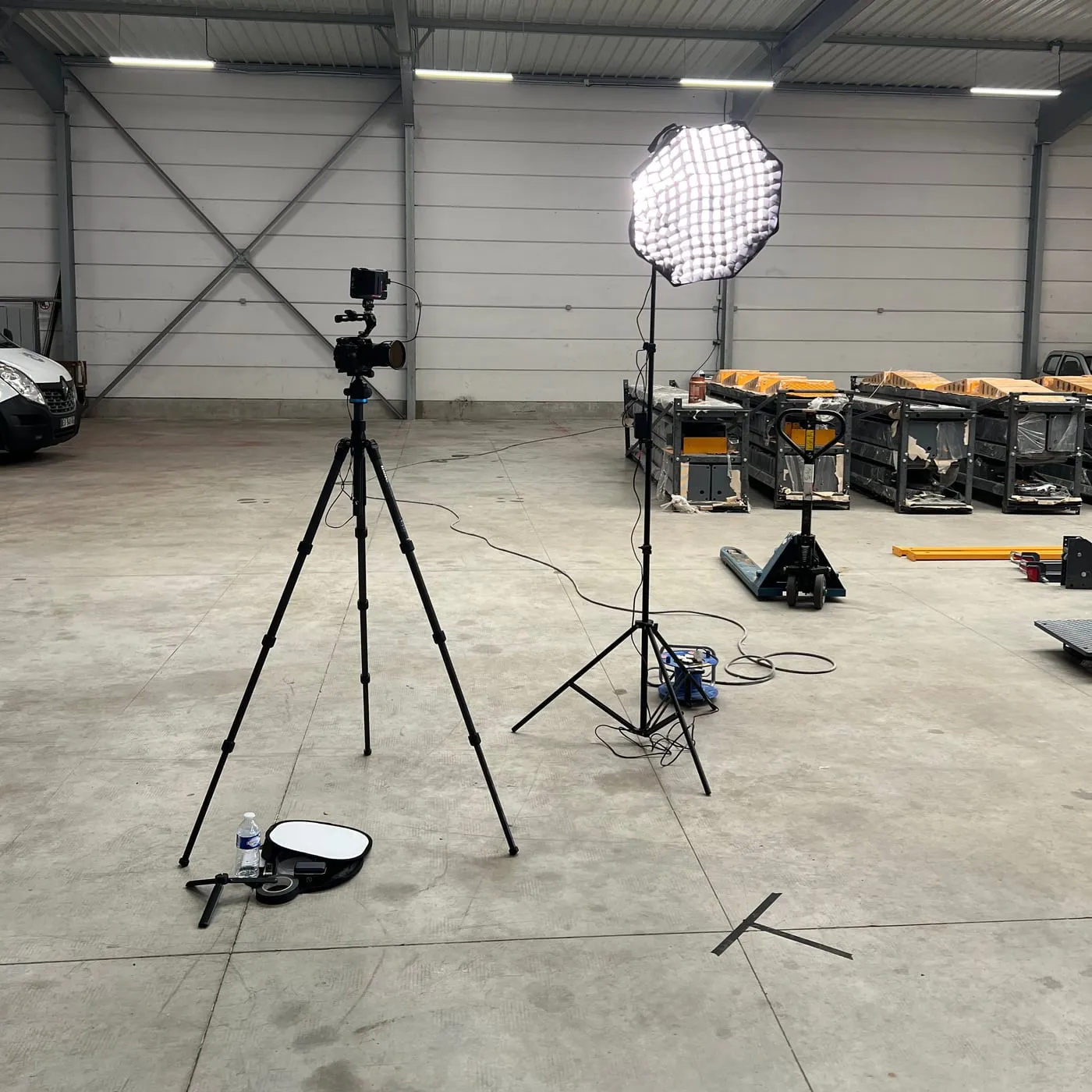 The setup, ready and waiting before the interviewee arrives.
Sound and lighting
Without clean audio, an interview is unusable, however good the picture. I use lav mics plus a backup mic, and I monitor the sound for the whole interview.
Lighting is set up on location: it keeps the person looking sharp and easy on the eye, even in a badly lit office or a trade show hall. When the video calls for it, I shoot with a two-camera setup, which gives more options in the edit.
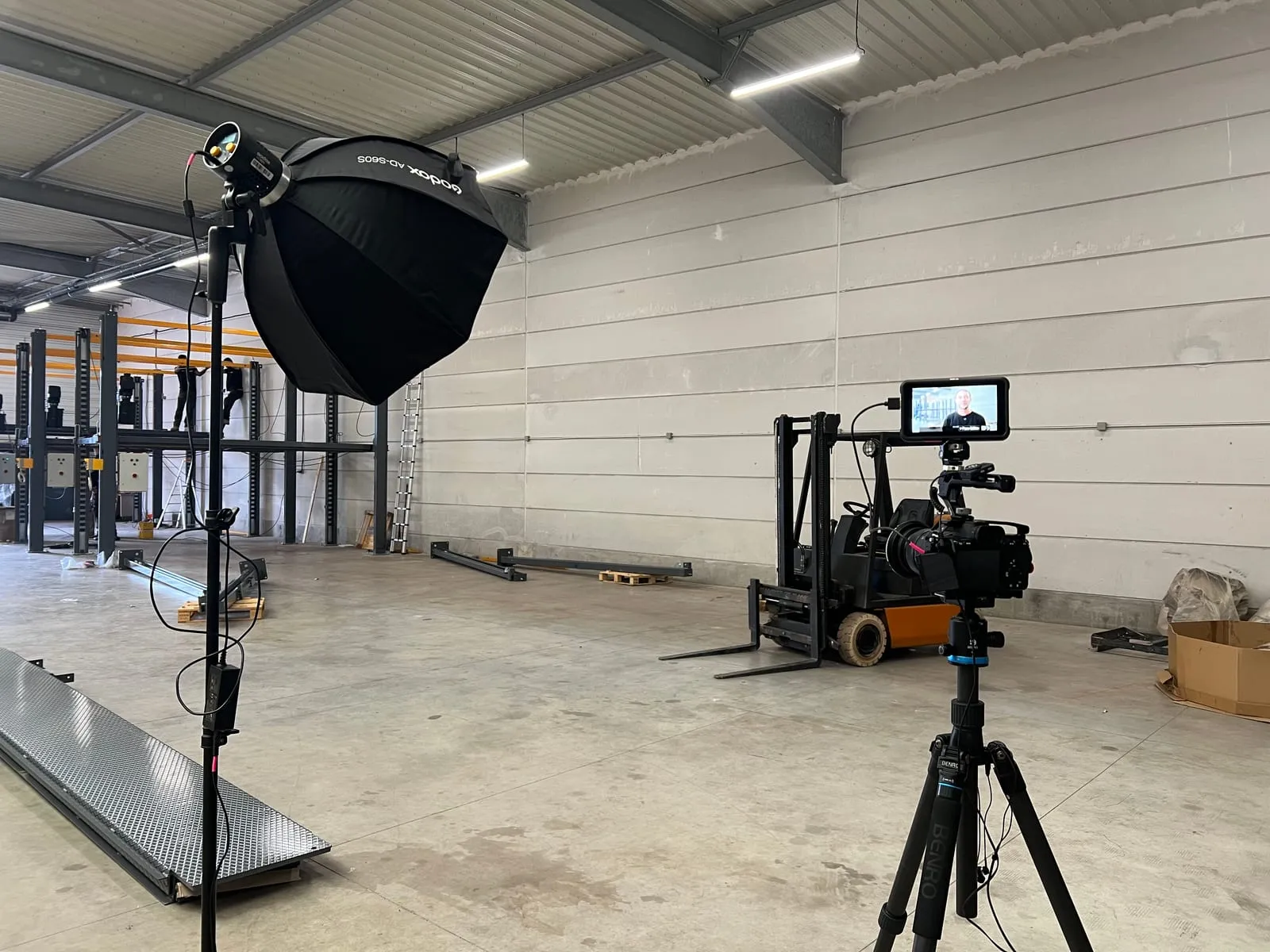 A soft key light off to one side, with the camera at eye level.
During the interview, I keep an eye on framing, focus and exposure on a monitor. All the interviewee has to do is talk to me.
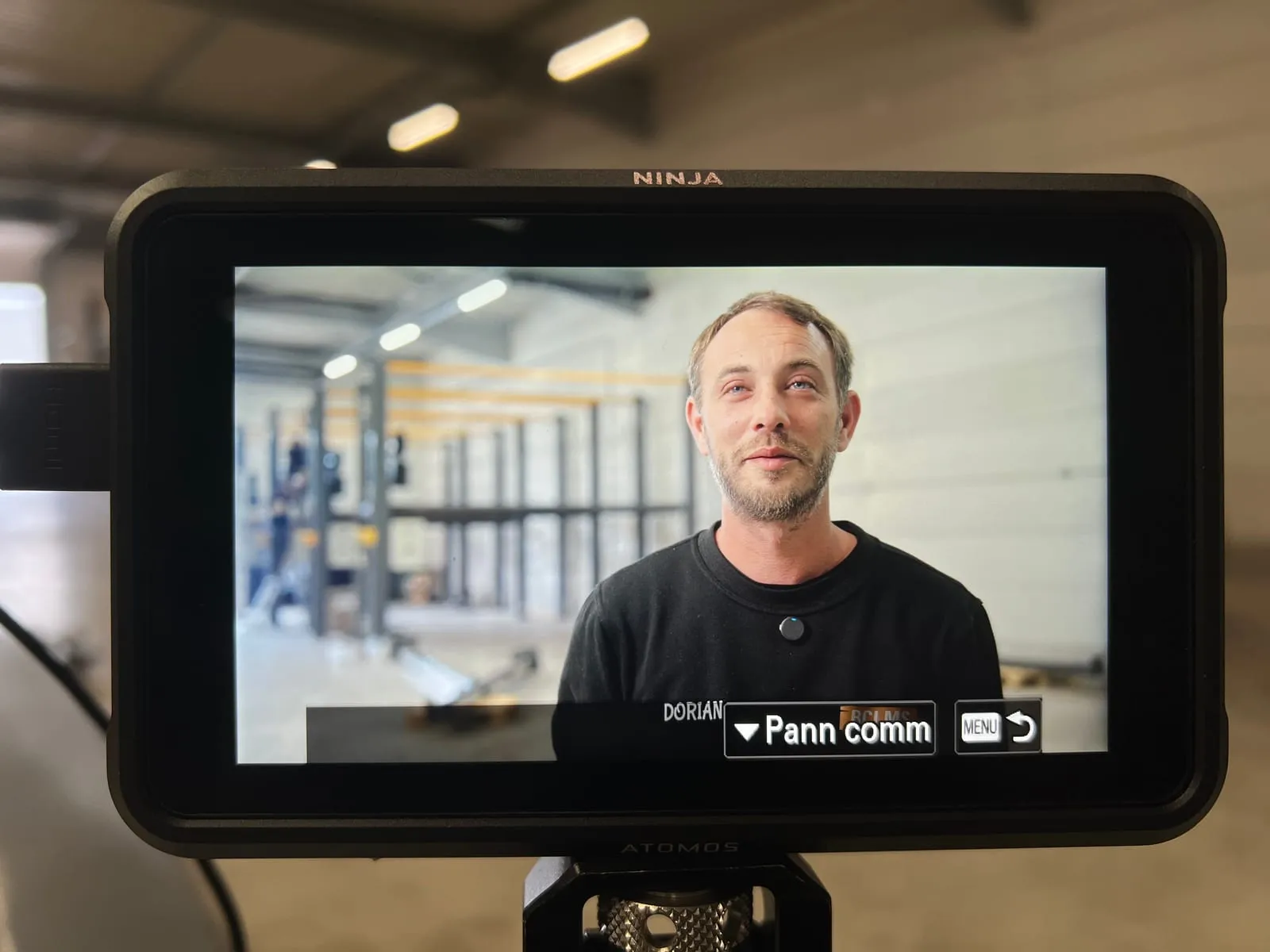 Checking the framing on the monitor during the shoot.
Quick interviews at events
At an event, you often get just a few minutes with a guest between two key moments. You need to be ready before they arrive: location chosen, lighting and sound in place, two or three sharp questions.
For Bang & Olufsen, I interviewed the artist Jérémy Kapone at the listening session for his new album, and then the actor Pascal Elbé about sound at the “Sound of Paris” evening. Two vertical interviews, running 2 min 53 and 1 min 19, posted on the brand’s Instagram account.
Vox pops: spontaneity comes first
A vox pop is the opposite of a prepared interview: you’re after spontaneous answers from passers-by or visitors. So the preparation goes into the question itself, which needs to be simple, fun or close to everyday life.
For Pluxee, the vox pops ask passers-by about going back to school or about Parents’ Day. For Kinder Bueno at Lollapalooza Paris, we filmed a “Would you rather?” with festival-goers.
In the edit: keep what carries the message
A twenty-minute interview often comes down to one usable minute. In the edit, I keep the lines that carry your message and cover them with B-roll from the field: the workshop, the site, people’s hands at work, the teams. You get a rough cut, and your feedback goes into the final cut before delivery.
Key takeaways
- Start with what the video is for.
- Ask open questions and send them in advance, without the answers.
- Choose a quiet location that shows the work.
- Take the time to put people at ease.
- Treat the sound with as much care as the picture.
Planning a video with interviews of executives, employees or clients? Tell me about your project in a few lines and I’ll get back to you within 48 hours with a set of questions and a detailed quote. Get a quote · See my interview videos